
Dear Reader,
I wrote this book to help people, and I wanted to create characters that were diverse. I wanted everyone to feel different and struggle with something only they could understand, but couldn’t deal with alone. Claire obviously suffers from Clinical Depression. Chiyo suffers from guilt and shame from homophobic parents, Amo’s muscle dysmorphia, and Rachel (who chose the burden of leadership).
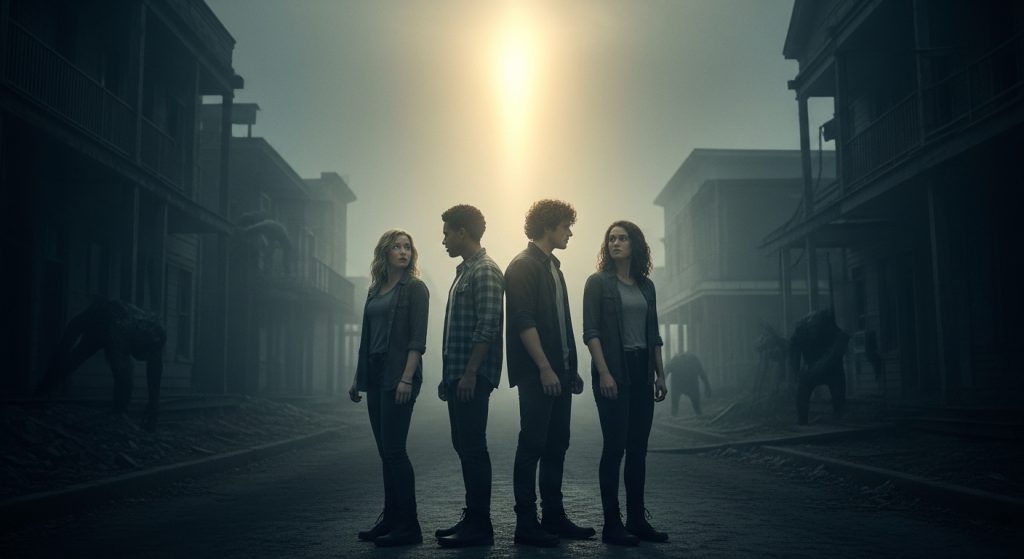
All of these people face a horrifying evil monster that knows them better than themselves and can use their trauma against them. The monster is a mirror, and in that sense: they never fight it, but always themself. When fighting our demons, we know our weakness, we know what hurts, but we don’t always know what can help us. This is why Claire and her friends stand a real chance when entering that ghost town: they have each other. The bravest thing they do is to face themselves, and then ask for help because they know they can’t win without it.
Since I was a kid, I have been a fan of Silent Hill. This book draws a lot of obvious inspiration from that franchise, but one thing that I love the most— besides its deep psychological horrors— is a boss fight in Silent Hill 3. Near the end of the game: you are on a carousel elevator, and Heather faces a dark shadow version of herself. Now, Heather is not who she thinks she is. This shadow is not just a spooky “Oh, I’m you but evil!”. It really IS her, another version of her. This fight is about facing her inner demon and conquering it. Heather is blessed in this way, as we can never have that opportunity. The takeaway I gained from that boss fight is what I wanted to bring to this book and others: a real face-off with what lies beneath these characters, and whether they fold under pressure and submit to their agony… Or if they find the courage to ask for help and fight back.
Circling back to my “struggle with something only they could understand” point, not everyone understands all the different emotional problems people have. Some people are blessed not to have anxiety or depression, and I’ve heard them say they can’t understand what that’s like for those who do. This was a major reason I wrote Agony, and why every character is so diverse. If you’ve never lost someone close to you, then you can’t truly understand what that feels like. Likewise, if you’ve never finished a mile run race, you can’t understand the joy that person could feel. Those are unique to them; our problems and triumphs are our own. By joining these characters, I (hopefully) could accurately convey what it’s like to be them. The guilt of having to give up what you love to appease those who think of themselves; the shame of wanting what you’re told is wrong; the alienation of oneself within their own body and how that affects their life. The agonizing emptiness of depression. Real people go through these problems, and I thought it was important for people who don’t to possibly find a way to understand by reading Agony. So, the next time you try to help a friend who is suffering: you won’t sound like a broken record you heard from someone else or like you didn’t know what they were talking about
Eternal Fan of Silent Hill,
Clay Tarlton-Hensley